You should never have to manage PCOS alone.
Symptom trackingSymptom tracking
Alaia brings your symptoms, cycle, medications, and appointments together in one place, so you can see the patterns, prepare for your doctor, and take control of your health.
New to PCOS?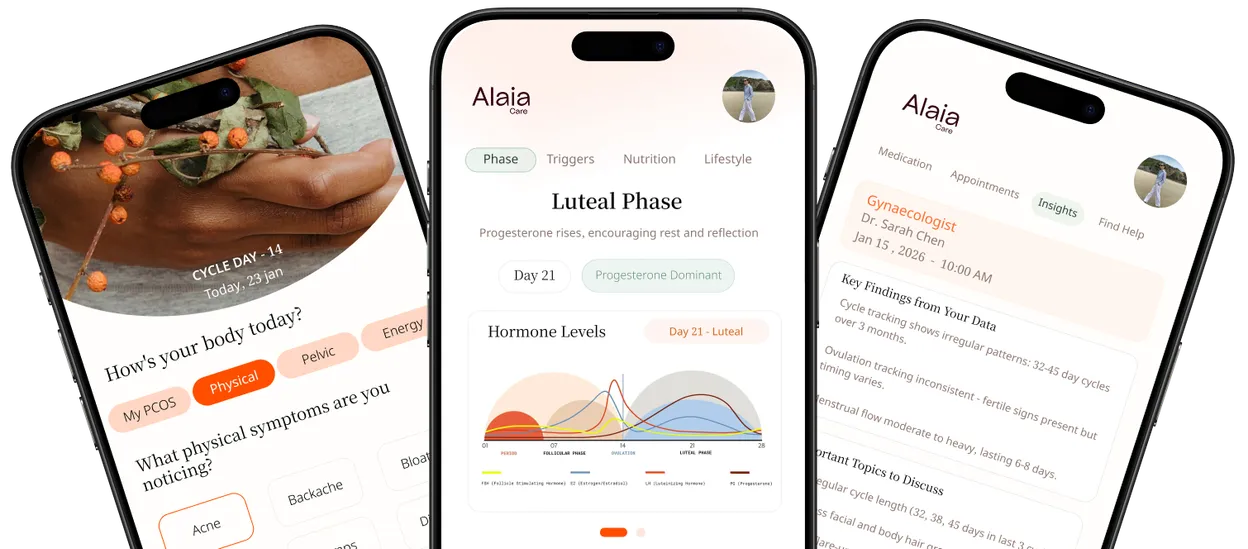
The reality
PCOS affects 1 in 10 women. Most are left to figure it out alone.
Up to 70% of women with PCOS remain undiagnosed worldwide. The average woman waits more than 2 years and sees 3 or more doctors before getting a diagnosis, and 85% are dissatisfied with the information they receive along the way.
Once diagnosed, care is fragmented across gynaecologists, endocrinologists, dermatologists, nutritionists, and mental health professionals, with no system connecting the dots.
Existing apps assume regular cycles, track fertility instead of the full picture, and offer generic advice that does not account for the fact that PCOS looks different in every woman.
That is the gap Alaia exists to close.
70%
undiagnosed worldwide
2+
years to diagnosis
3+
doctors on average
85%
dissatisfied with information
Understanding PCOS
What is PCOS?
Polycystic Ovary Syndrome (PCOS) is a hormonal and metabolic condition affecting approximately 200 million women worldwide. Despite the name, it is about far more than ovaries. PCOS can affect your cycles, skin, hair, weight, energy, mood, fertility, and long-term metabolic health.
PCOS is typically diagnosed using the Rotterdam criteria, which require two of three markers: irregular or absent ovulation, elevated androgen levels, and polycystic ovaries on ultrasound.
The condition presents across four phenotypes, each with different symptom profiles and management priorities. Not all women with PCOS have insulin resistance. Not all have irregular cycles. This is why generic tracking tools fall short and why Alaia is built differently.
Irregular or absent ovulation
Cycles longer than 35 days, fewer than 8 periods a year, or no periods at all.
Elevated androgen levels
Visible as acne, excess hair growth or hair thinning, or confirmed on blood tests.
Polycystic ovaries on ultrasound
12 or more follicles or enlarged ovaries seen on imaging.
How Alaia is different
Built around how PCOS actually works.
Alaia is not a generic health app with a PCOS label. Every feature is designed around the complexity and variability of PCOS.
Symptom-first, not cycle-first
Most health apps put your period at the centre. Alaia puts your symptoms there. Track 50+ PCOS-specific symptoms across 8 categories, from skin and hair to mood, energy, digestion, and cognition. Your cycle is part of the picture, not the whole picture.
Designed for irregularity
A 90-day gap between periods is not a missing cycle. It is a 90-day cycle. Alaia's cycle tool is built around four named states — irregular, oligomenorrhea, amenorrhea, and medically regulated — so your experience is never treated as an error.
Your data becomes your voice
Alaia turns your daily logs into structured appointment prep reports tailored to each specialist, from endocrinologists to dermatologists. Walk into your next appointment with a clear, evidence-based summary of what has been happening and what to discuss.

Every symptom matters. Even the ones no one talks about.
From acne and hair loss to brain fog, binge urges, and unrefreshing sleep, Alaia covers the full range of what PCOS can look like. Log what you experience, rate the severity, and let the app find patterns you might not see on your own.
If something is missing from the list, add your own. Your experience defines what is relevant, not a pre-set template.
50+ symptoms across 8 categories
Physical, cycle, mood, energy, pain, digestive, appetite, and cognitive. Every part of your experience has a place.
Pattern recognition
Alaia connects your symptoms to your cycle, medications, and lifestyle over time, turning daily logs into insight you can act on.
PCOS snapshot
See where your symptom burden is concentrated this month and how it is changing across categories.

Walk into your next appointment prepared and heard.
The average PCOS appointment is 15 minutes. Alaia helps you make every minute count.
Before each visit, Alaia generates a prep report filtered to the specialist you are seeing: cycle data for your gynaecologist, skin patterns for your dermatologist, energy and metabolic trends for your endocrinologist. It highlights your recent patterns, suggests questions based on your data, and produces a downloadable report you can share.
For women still seeking a diagnosis, Building My Case mode maps your logged symptoms to the Rotterdam diagnostic criteria, giving you structured evidence to bring to appointments instead of trying to remember everything on the spot.
- Specialist-specific prep reports, from gynaecologist to dermatologist to endocrinologist.
- Question suggestions built from your own recent symptom patterns.
- A downloadable visit report you can bring, email, or share.
- Building My Case mode for women still seeking a diagnosis.
Who Alaia is for
Whether you are fighting for a diagnosis, managing on your own, or feeling dismissed, Alaia is built for you.
Still searching for answers
You suspect PCOS but do not have a diagnosis yet. You have been to multiple doctors and no one has connected the dots.
Alaia helps you build a structured evidence record mapped to the Rotterdam diagnostic criteria, so your next appointment starts with data, not just a list of symptoms from memory.
Diagnosed, navigating alone
You have a diagnosis, but your doctor has not prescribed digital tools or integrated care. You are managing PCOS on your own.
Alaia gives you the full tracking, medication adherence, pattern recognition, and appointment prep that your care team is not coordinating for you.
Dismissed but not giving up
A doctor has told you your symptoms are not serious, or that you should just lose weight. You know something is wrong.
Alaia helps you document your experience over time, prepare for a second opinion, and walk into appointments with evidence that is harder to dismiss.
Every screen tells part of your story
From symptom tracking to appointment prep, each feature is built to help you understand your body and feel more in control.
Trust
Rooted in science, shaped by lived experience.
Alaia is built by two women with PCOS who understand the condition from the inside. All health content is reviewed by our scientific advisory board. The app is designed as a Class I Software as a Medical Device under EU MDR 2017/745, with clinical-grade data standards from day one.
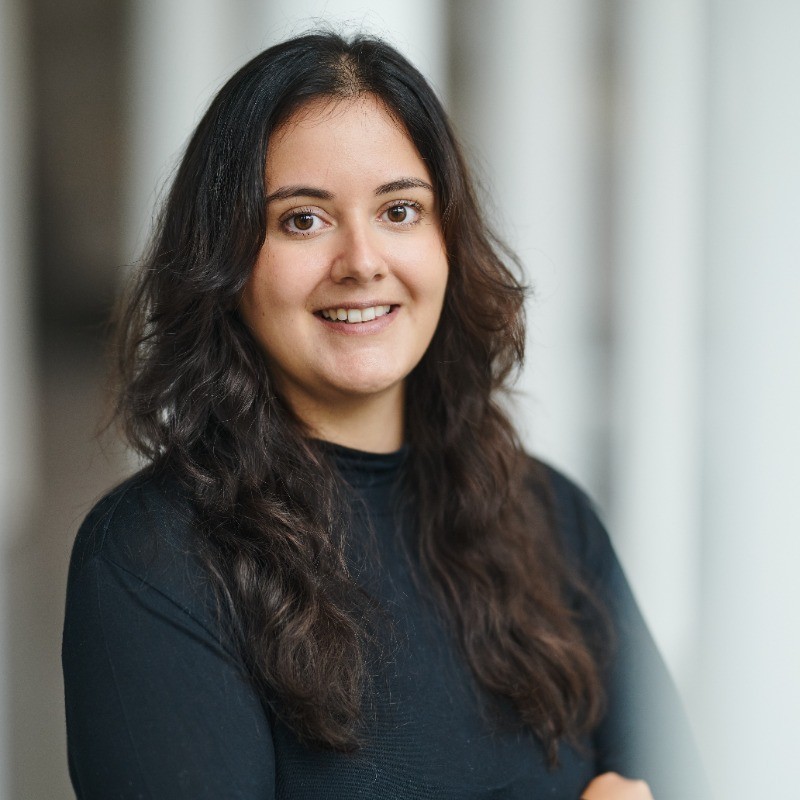
Laure Santolini, Co-Founder. Diagnosed with PCOS after years of dismissed symptoms. Background in strategy consulting (EY) and biotech/medtech ventures (Solvay Business School).

Manon Vervaeke, Co-Founder. Knows firsthand how isolating a PCOS diagnosis feels. Background in international sales (La Collection) and an MBA from Vrije Universiteit Brussel.
Supported by
FAQs
Questions we hear most
A few answers to help you understand how Alaia works and what makes it different.
Polycystic Ovary Syndrome is a hormonal and metabolic condition affecting roughly 1 in 10 women of reproductive age. It can cause irregular cycles, acne, excess hair growth, hair thinning, weight changes, fatigue, mood changes, and fertility challenges, though symptoms vary widely from person to person.
Alaia is a digital health companion for women with PCOS. It helps you track symptoms, understand patterns, prepare for doctor appointments, and manage your condition with evidence-based tools. It is not a generic period tracker. It is built specifically for the complexity and variability of PCOS.
Most health apps assume regular cycles and focus on fertility. Alaia starts from symptoms, supports four different cycle states including absent periods, and generates specialist-specific appointment prep reports. It also includes advocacy tools for women who are still seeking a diagnosis or have been dismissed by their doctor.
No. Many women with PCOS have highly irregular or absent cycles. Alaia works just as well if you focus on symptoms, mood, energy, or medication tracking instead. Your cycle is one input, not the centre of the app.
Yes. Your data is stored securely in the EU, encrypted at rest and in transit, and belongs only to you. Alaia complies with GDPR, including health data protections under Article 9. You can export or delete your data at any time. We never sell your data.
Alaia is designed as a Class I Software as a Medical Device under EU MDR 2017/745. It is a tracking and information tool, not a diagnostic or treatment tool. We are pursuing reimbursement through public health insurance pathways in Belgium, France, and Germany.
Yes. Alaia helps you create a clear, specialist-specific visit report you can download, email, or bring to your appointment, making it easier to discuss what has been happening and what matters most.
Alaia is currently in development with beta launch coming soon. Join the waitlist to be the first to get access.
PCOS care should not feel like a fight. Let us help.
Join the waitlist for early access. Be part of building the tool that should have existed years ago.